
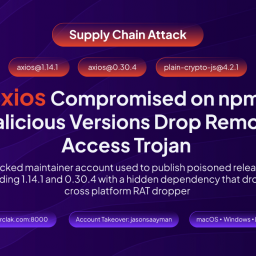

A highly sophisticated supply chain
attack has struck one of the most widely used JavaScript libraries in
the world. Two malicious versions of the popular HTTP client axios—1.14.1 and 0.30.4—were
published to npm after a maintainer account was hijacked, introducing a
stealthy remote access trojan (RAT) affecting macOS, Windows, and Linux
systems.
With over 100 million weekly downloads, axios sits at the core of countless applications. This incident represents one of the most precise and operationally advanced attacks ever observed in the npm ecosystem.
Immediate warning
If you installed:
Assume your system is compromised.
How the attack worked
1. Maintainer account hijack
The attacker gained control of a primary axios maintainer’s npm account and used it to publish malicious versions directly to npm—bypassing the project’s secure GitHub Actions release pipeline.
These releases:
- Appeared legitimate (same maintainer identity)
- Had no corresponding GitHub commits or tags
- Were published using a stolen long-lived npm token (not secure OIDC publishing)
2. Pre-staged malicious dependency
The attacker quietly published a package named:
This package:
- Mimicked a legitimate crypto library
- Included no obvious malicious code in its main files
-
Contained a hidden
postinstallscript: “postinstall”: “node setup.js”
This script executed automatically during installation—no import required.
3. Dependency Injection into axios
The compromised axios versions added a single new dependency:
“plain-crypto-js”: “^4.2.1”
That’s it.
No other files changed. No malicious code inside axios itself.
This is what made the attack so dangerous:
- Static code inspection shows nothing suspicious
- The payload executes during install, not runtime
- The dependency is never actually used in the code
The payload: Cross-platform RAT dropper
Once triggered, the malicious dependency:
- Executes instantly during
npm install - Contacts a live command-and-control (C2) server
- Downloads a platform-specific second-stage payload
- Installs a remote access trojan
- Deletes itself and wipes evidence
Read the entire article on the Hacking News post: https://www.hackingnews.com/malware/axios-compromi...